


- Home
- About
- Attorneys
- Team
- Criminal Defense
- Crimes Against Children
- Sexual Assault of a Child
- Child Pornography
- Child Sex Abuse
- Child Abuse & Domestic Violence
- Child Trafficking
- Improper Relationships Between Teachers and Students
- Indecency with a Child
- Injury to a Child
- Solicitation of a Minor
- Sexual Exploitation of a Child
- Kidnapping and Abduction
- Endangerment
- Neglect and Abandonment
- Drug Crimes
- DWI
- Felonies
- Sex Crimes
- Property Crimes
- White Collar Crimes
- Violent Crimes
- Weapons Charges
- Crimes Against Children
- Federal Crimes
- Federal Child Pornography
- Federal Child Sexual Assault
- Federal Healthcare Fraud
- Federal Human Trafficking
- Federal Gun Trafficking
- Federal Drug Conspiracy
- Federal Unlawful Possession of a Firearm by a Felon
- Federal Aggravated Identity Theft
- Federal Sexual Exploitation of a Child
- Federal Money Laundering
- Federal Wire Fraud
- Federal Drug Trafficking
- State Crimes
- Scholarship
- Media
- En Español
- Contact
When Can a Person Face Federal Weapons Trafficking Charges?
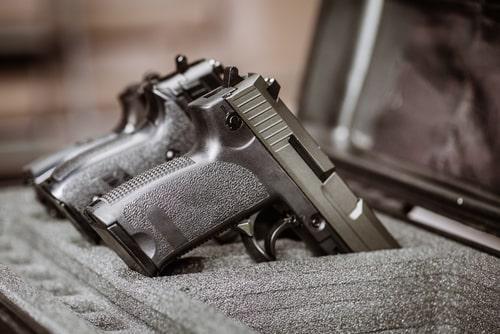
Buying, selling, or transporting a firearm must be done in accordance with Texas law. Failure to do so can result in criminal charges. Not only that, but certain violations can also raise charges from the state to the federal level. These include things like dealing without a license and forging federal ownership forms.
Federal weapons trafficking charges carry severe consequences. They go well beyond what Texas state courts typically impose. If you or someone you know is under investigation or has been charged in 2026, a Texas criminal defense attorney can explain exactly what you're up against.
What Moves a Weapons Charge from the Texas State to the Federal Level?
Federal charges apply when a case crosses state lines, involves federally regulated firearms or dealers, or violates specific federal laws. Note that not all border crossing charges have to involve actually leaving one state and entering another. Federal jurisdiction often applies because of how and where a gun was made, sold, or transferred.
One of the primary federal laws governing illegal weapons dealing is 18 U.S.C. § 922. This law regulates a wide range of behavior related to the manufacture, sale, and transfer of firearms. Under this law, it's illegal to deal in firearms without a federal firearms license (FFL), to transfer a gun to someone you know or have reason to believe is prohibited from owning one, or to buy a gun on behalf of someone else.
When prosecutors can show a pattern of this kind of conduct, they will typically pursue federal trafficking charges. They will look for things like multiple sales, a profit motive, or distribution across state lines.
Actions that Can Lead to a Federal Weapons Trafficking Charge
Weapons trafficking charges don't require running a massive illegal arms operation. It’s important to understand how strict the regulations around trafficking are to know if charges will escalate from the state to the federal level.
Straw Purchases
A straw purchase is when one person buys a gun on behalf of another person who either can't legally own a firearm or wants to avoid being traced. Even if the buyer is legally allowed to own a gun themselves, making a purchase like this is a federal crime. This is one of the most common entry points for trafficking charges.
Dealing Without a License
Selling guns regularly without holding a federal firearms license is a federal offense. There's no bright-line rule for how many sales trigger this. Prosecutors look at things like how frequently you're selling, whether you're making a profit, and whether you're presenting yourself as someone in the business of selling guns.
Falsifying Federal Firearms Forms
When someone buys a gun from a licensed dealer, they fill out a Federal Bureau of Alcohol, Tobacco, Firearms, and Explosives (ATF) Form 4473. Lying on that form about your identity, your criminal history, or who the gun is actually for is a separate federal crime that can be added on top of trafficking charges.
Trafficking Across State Lines
Moving guns from one state to another to avoid stricter laws, or selling guns in ways that intentionally exploit gaps between state laws, is illegal under federal law. This is exactly the kind of conduct federal agencies like the ATF are on the lookout for in trafficking charges.
How Serious Are Federal Weapons Trafficking Convictions?
Federal weapons trafficking charges are generally more serious than state charges. Federal sentencing for weapons trafficking offenses can result in years or even decades in federal prison. Sentences may be raised based on the number of guns involved, whether any of the firearms ended up being used in a violent crime, whether the defendant has a prior criminal record, and whether the trafficking was connected to a drug offense or organized criminal activity.
Unlike many state charges, federal sentences are served in federal prison – not county jail – and in general, parole for these charges has been abolished in the federal system. Federal inmates must serve at least 85 percent of their sentence, and "good time" credit is limited to 54 days per year.
Common enhancements of trafficking charges include:
- Trafficking guns to minors
- Prior felony convictions
- Firearms connected to drug trafficking
- Guns modified to be fully automatic or untraceable because they have no serial number
If any of these apply to you, you will need a particularly strong legal defense to try to minimize charges.
What Should You Do if You Are Being Investigated for Firearms Trafficking?
Federal firearms investigations often begin long before charges are filed. The ATF, FBI, and other agencies may spend months building a case. If federal agents have contacted you, searched your home or business, or if you've been told you're a "person of interest," do not wait to get legal help.
You have the right to remain silent, and you should use it. Anything you say to investigators can be used against you. This includes statements that you made while trying to be cooperative. Get in contact with a federal criminal defense attorney before saying more.
Call a Texas Federal Weapons Charge Defense Attorney Today
At The Crowder Law Firm, P.C., we've secured numerous not-guilty verdicts and acquittals for our clients. Our Texas criminal defense lawyers are highly knowledgeable in federal firearms law and have experience defending some of the most serious charges in the federal system. Don't wait. Call The Crowder Law Firm, P.C. at 214-544-0061 to schedule a free consultation today.